A Palace to furnish

In 1549, Eleanor of Toledo, the wife of Cosimo I, purchased the palace across the Arno from the Pitti family; it thus became the sovereign’s residence, and remained so for four centuries until the rise of the Republic and its transformation into a museum. The court’s political and private heart and the central nucleus of its propaganda, the palace became a place where furnishings of the highest order were commissioned and collected, as attested to by the specimens – in some cases true masterworks themselves – on display in this room.

While truly little remains of the Renaissance phase, late-Baroque splendour endures in the cabinetwork and the gemstone commesso (mosaic) from Botteghe Granducali – a series of Grand Ducal workshops, located in a part of the Uffizi Galleries, that dealt with woodworking (with such high-stature inlay artists as Leonard Van der Vinne), bronze casting, and commesso with gemstones. Established by the Medicis starting in the late 16th century, the Botteghe Granducali remained in operation until the arrival of the Lorraines in 1738. The court’s style during subsequent Lorraine rule kept up with the new fashions: with Ferdinand III, certain settings were transformed in accordance with the dictates of the Neo-Classical style, while under French rule Elisa Bonaparte (Baciocchi), Napoleon’s sister, refurnished some of the palace’s rooms with pieces in Empire style.

During the Restoration, this style was also adopted by Ferdinand III and his son Leopold II, with the severe lines of Empire furniture being adjusted to the various stylistic revivals brought back into vogue by 19th-century aesthetes, in keeping with a taste that was also prized by the Savoys after Italian Unification. Lastly, the House of Savoy is to be credited with the final rebirth: stripping of their furnishings the other sovereign residences in the pre-Unification states that had been absorbed into the Kingdom of Italy (Parma, Colorno, Lucca, Milan), the Savoys developed a wholly unique version of eclecticism that offered a synthesis of the “manners” of the past, not so much through works done in a given style, but through a casual blend of new and ancient pieces. This episode, which made Pitti Palace a genuine testing ground for the furnishings in the Quirinal Palace, concludes the room’s exhibit which, through some notable items, aims to traverse important moments in the history of taste – but also of the Palace itself.
Leonardo Van der Vinne (active 1660 - 1713)

Panel
1664
Veneered ebony with inlay of coloured woods and ivory
Inv. Mobili Artistici n. 753
foto
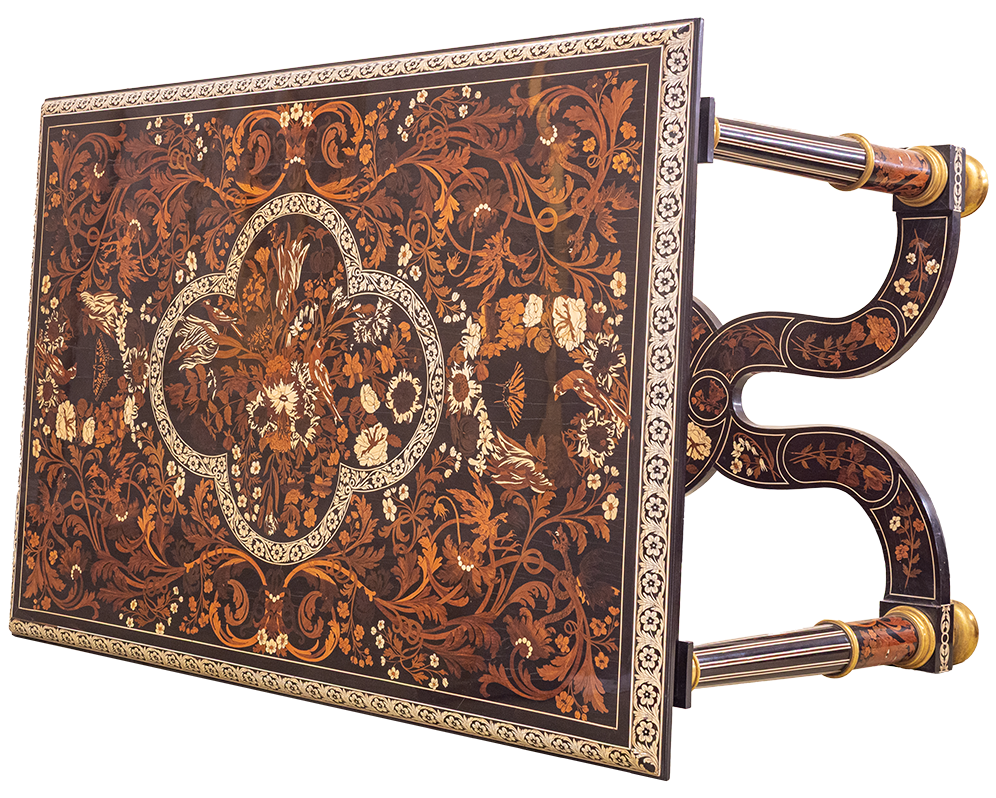
A Flanders native, Leonard Van de Vinne introduced to Florence – where he had arrived shortly after mid-century – a type of floral intarsia in Flemish style whose lively compositions were highly valued by the Medicis. On the table top, various kinds of flowers are depicted – especially tulips, cultivated with passion in the gardens of the Grand Ducal residences.

Botteghe Granducali e Leonardo van der Vinne

Kneeling stool
1687
Veneered ebony and rosewood, semiprecious stones and gilt bronze
Inv. Oggetti d’Arte Pitti 1911, n.804
foto
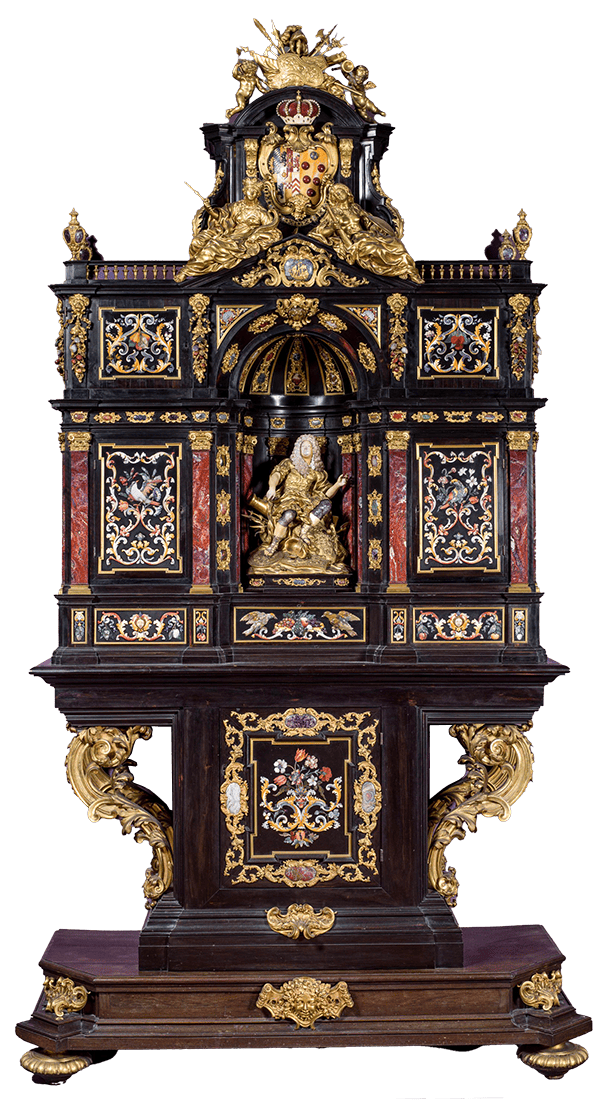
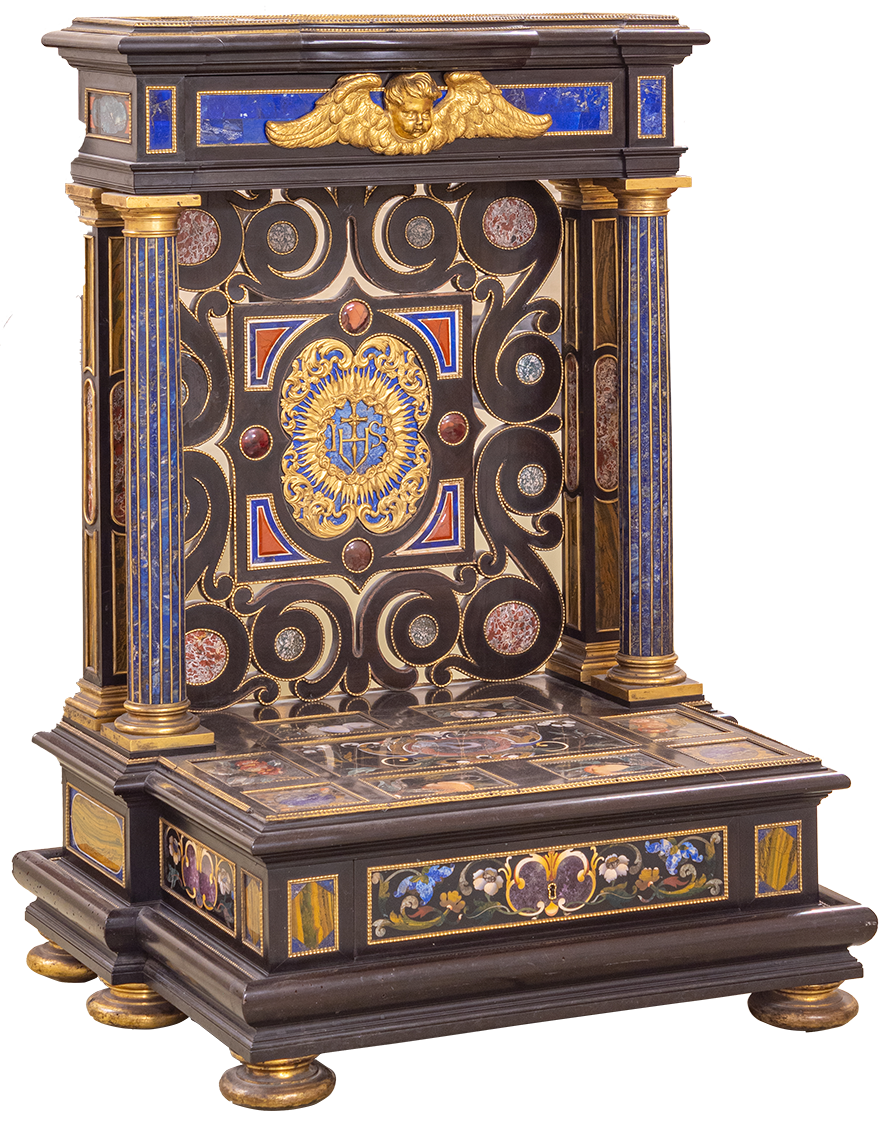
This kneeling stool’s severe architectural structure is enriched by no fewer than 62 tiles of semiprecious stones surrounded by gilt bronze frames. Made expressly for Grand Duke Granduca Cosimo III, the piece is an invaluable document of the activity performed by the workforce of artisans at Botteghe Granducali, the Grand Ducal workshops where the sumptuous furnishings for the Medici court were made.

Galleria dei Lavori in Pietre Dure (active 1660 - 1713)

Surface in semiprecious stones depicting a composition of porcelain vases
1797 circa
Inv. Oggetti d’Arte Pitti 1911 n. 934 (table top); Mobili Palazzo Pitti no. 13526 (base)
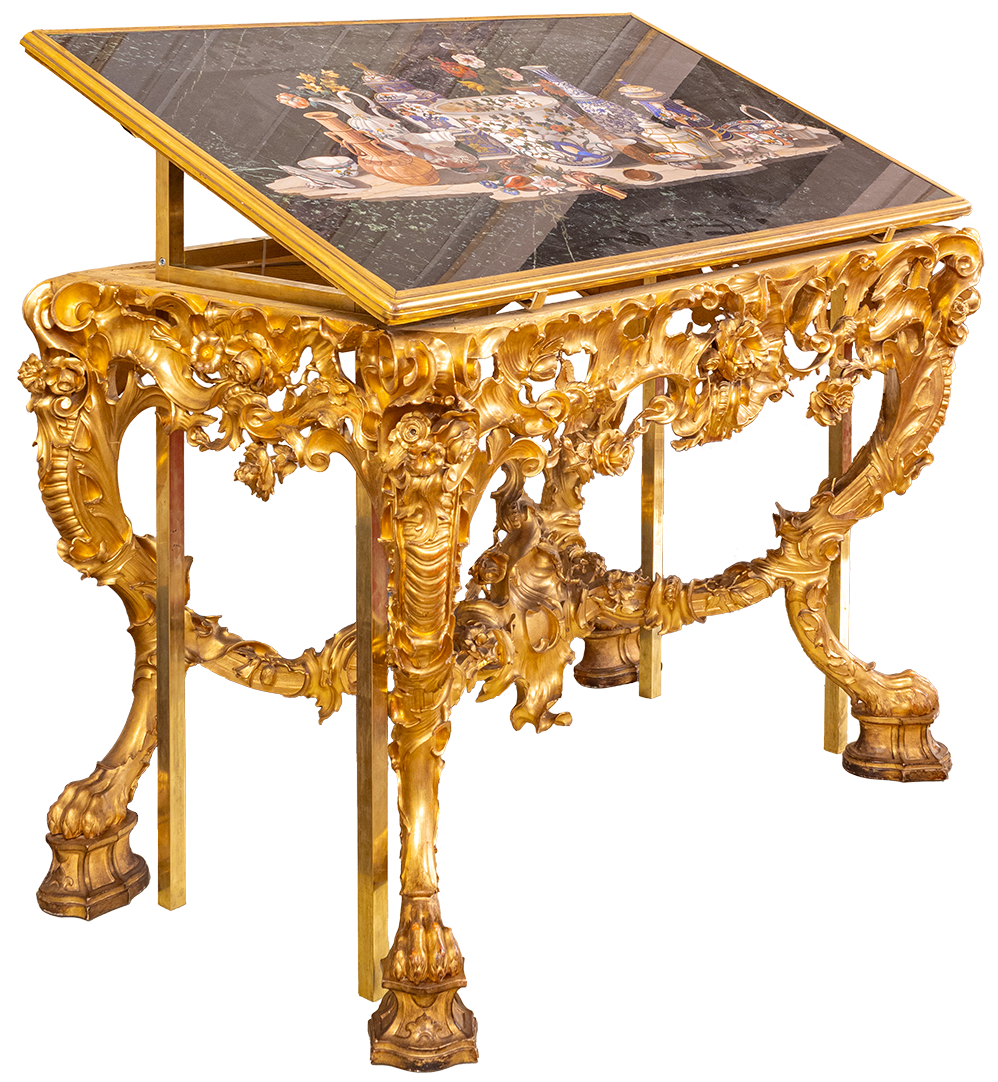
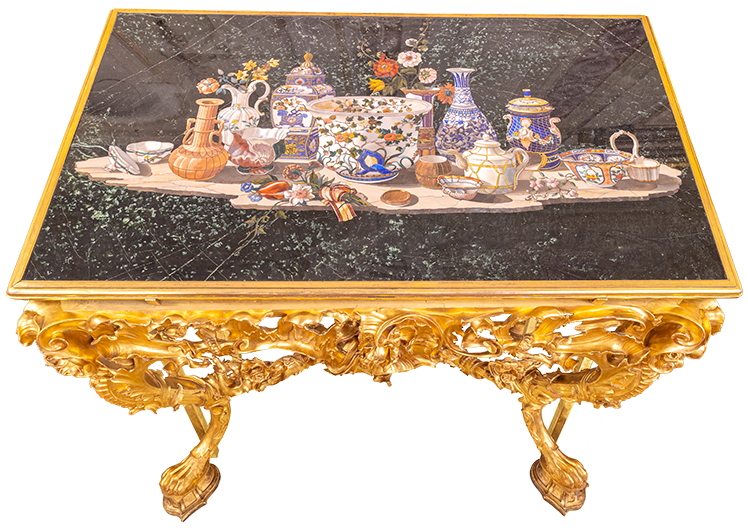
The surface is adorned with an articulated composition of vases made using chalcedony, jasper, lapis lazuli, and agate against a background of Egyptian nephrite. Done to the drawing by the painter Antonio Cioci, who took as his models some of the porcelain pieces now at the Pitti Palace, it documents to the highest degree the activity of Galleria dei Lavori in Pietre Dure, the gallery of works in semiprecious stones.

Japanese manufacture

Pair of vases
1664
Porcelain
Inv. Oggetti d’Arte Pitti 1911, n. 734
foto
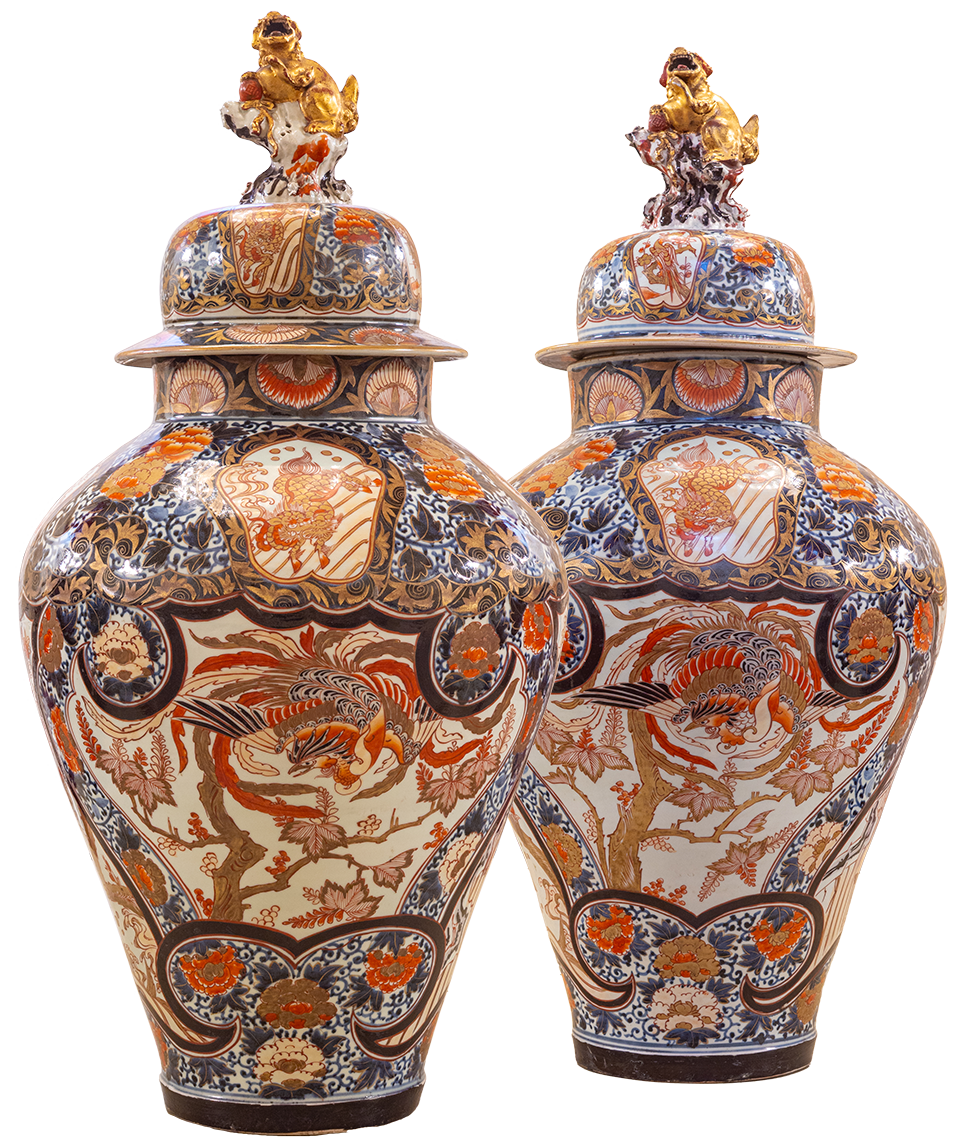
Belonging to the Grand Ducal collections since 1791, the two Imari porcelain vases are a manifestation of the interest in the artistic expressions of the Far East that characterized the collecting efforts first of the Medici Grand Dukes and then of the members of House of Habsburg-Lorraine that succeeded the Medici dynasty in 1737.

French manufacture

Chest of drawers
Terzo quarto del XVIII secolo
Lacquered wood overlaid with mother-of-pearl, with finishings in gilt bronze; top in verd antique
Inv. Mobili Palazzo Pitti 1911, n. 17094
foto
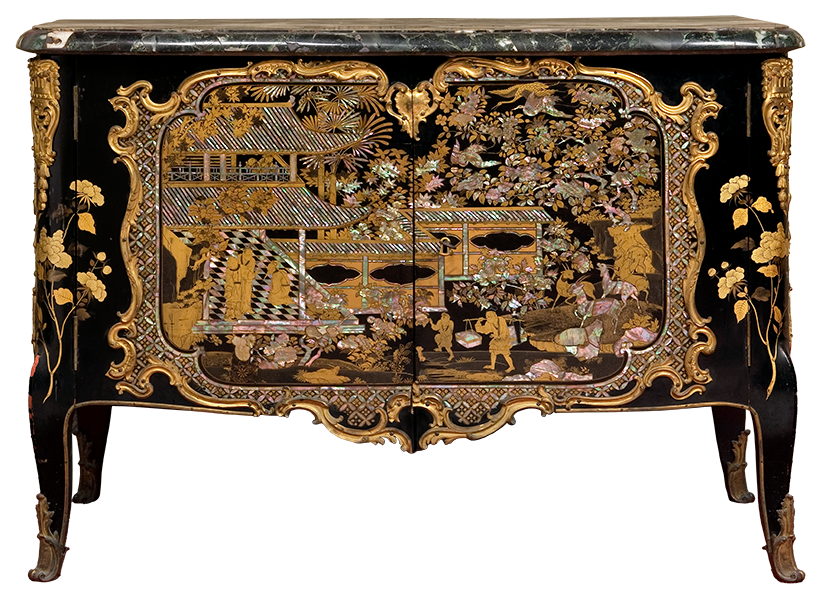
Made in France shortly after the mid-18th century using Japanese panels, the chest of drawers was brought to Florence by the Lorraine Grand Dukes, and has been recorded in the Pitti Palace inventories since 1771. In the preciousness of its decorations, it is patterned after the Rococo models in vogue in Paris around the mid-18th century.

Giovanni Socci (Florence 1755 c. – 1842)

Desk
1807
Veneered mahogany and elm burr, applications of wood and gilt metal
Inv. Mobili Palazzo Pitti 1911, n. 14138
foto
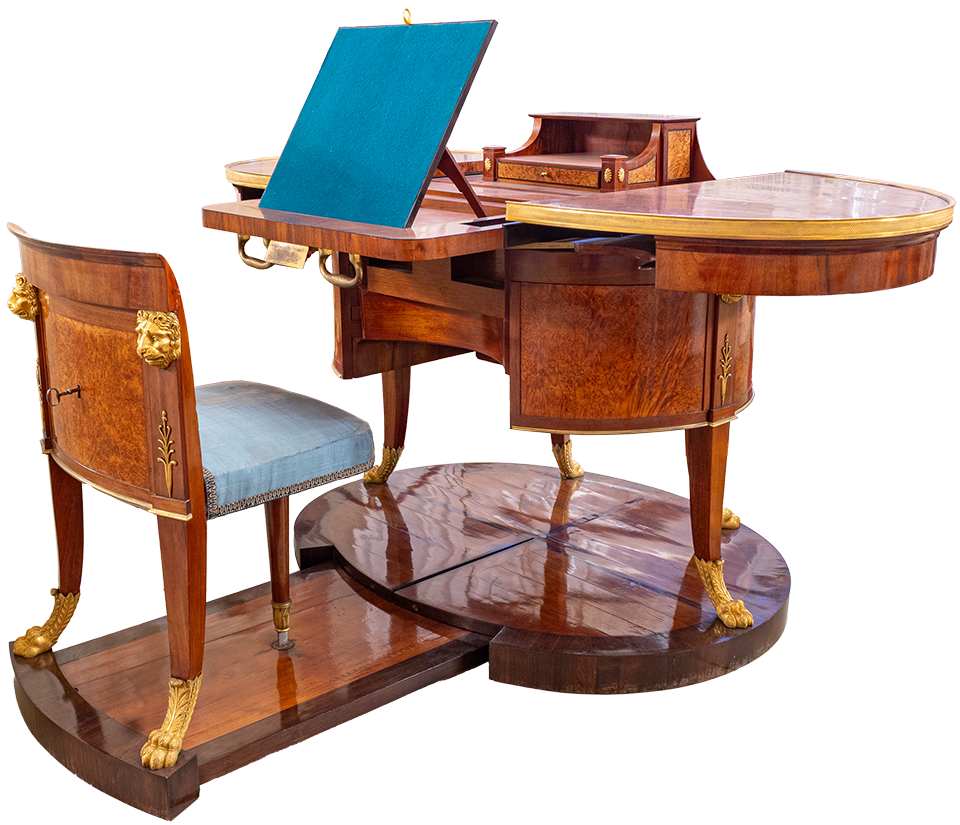
The original piece by Giovanni Socci was commissioned by the Bourbon �ueen Maria Luisa of Etruria; it was then replicated by the cabinetmaker in three more versions, one of which for Elisa Bonaparte (Baciocchi) with the top in Egyptian nephrite instead of wood. The piece documents the skill of Florence’s furniture makers in combining harmonious forms with extraordinary construction technique.

Sèvres Manufactory

Pair of vases
1811
Porcelain
Inv. Mobili Palazzo Pitti 1911, nn. 12249-62
foto
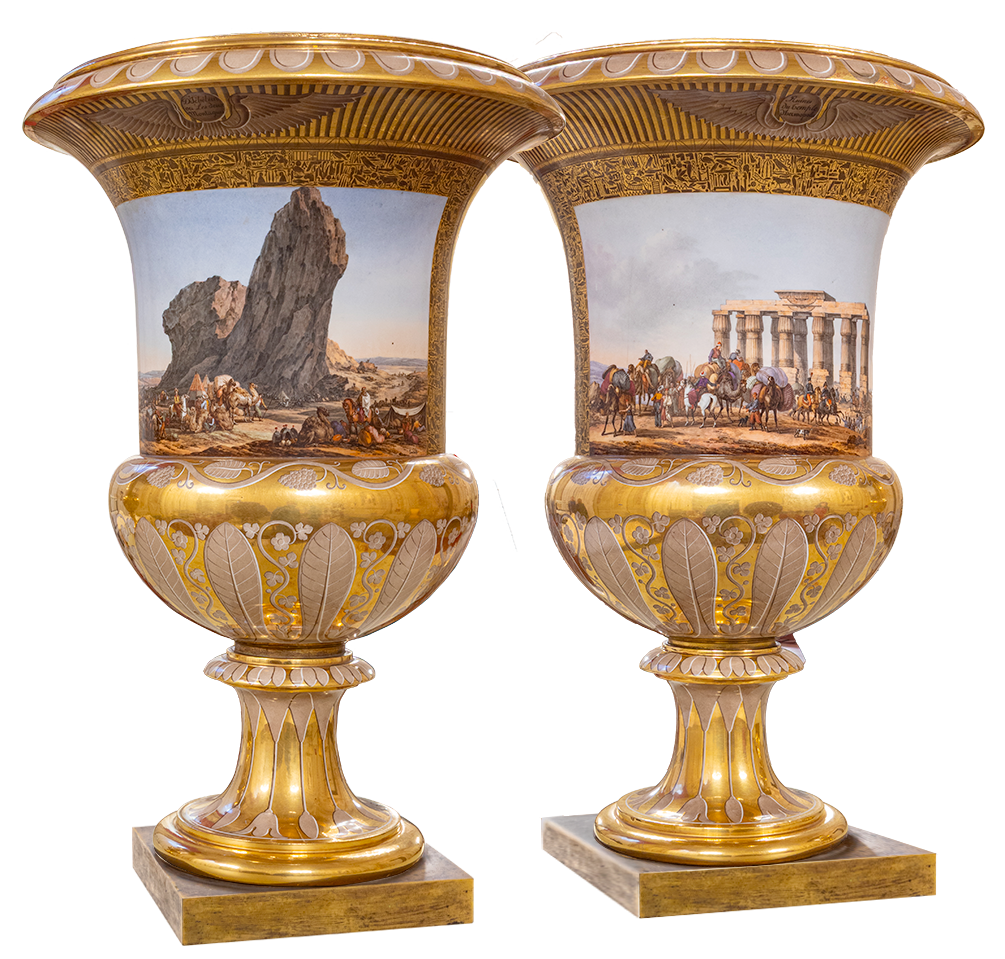
The vases’ shape originates from the famed ancient prototype known as the Medici Vase. The gold decorations inspired by those of Ancient Egypt, as well as the views depicting the ruins of the Temple of Hermopolis and the two crags of Djébéléin north of Cairo, are based on the etchings included in the volume by Dominique Vivant Denon titled Voyage dans la Basse e la Haute Ėgypte, published in 1802.

Sèvres Manufactory

Pair of vases
1810
Porcelain
Inv. Oggetti d’Arte Pitti 1911 nn. 928 - 929
foto
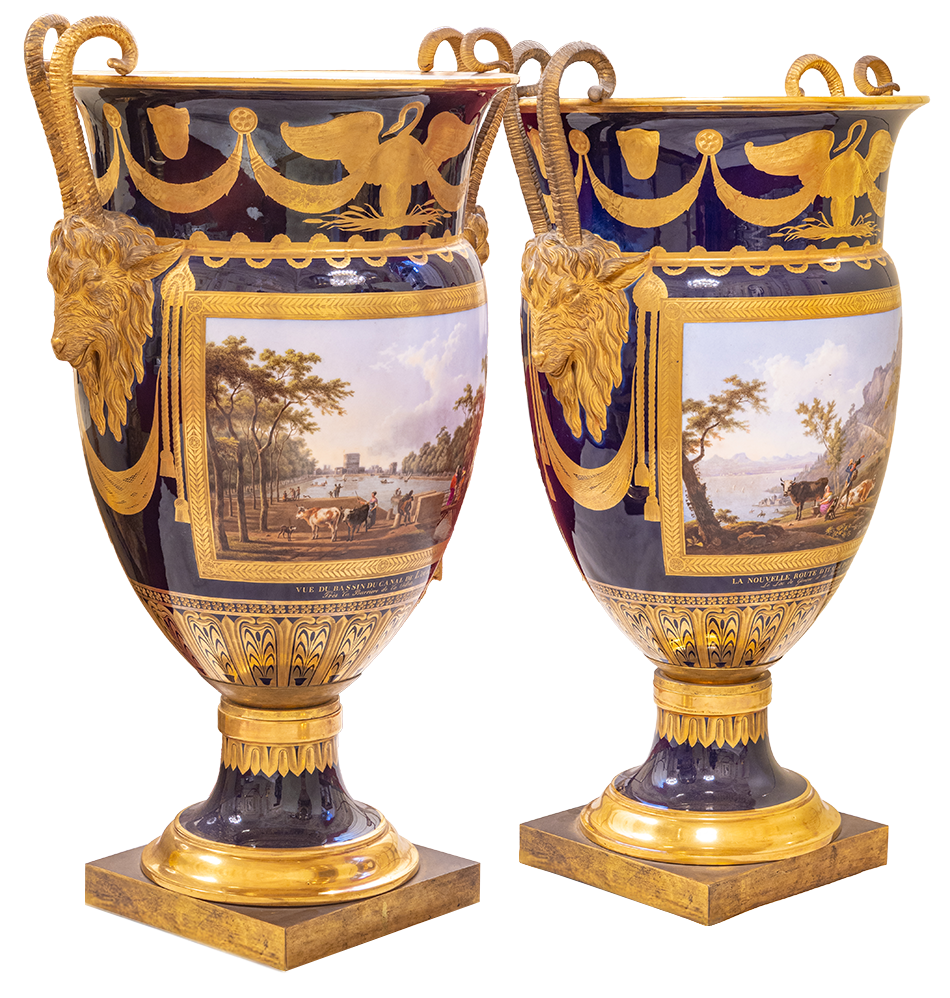
Against an intense blue background, the two vases respectively show views of the new Simplon road and of the Ourcq Canal near the lock at La Villette. These two works, signed by the painter De Marne, were made at the Sèvres Manufactory during the Napoleonic era and sent to Pitti when Elisa Bonaparte (Baciocchi), the Emperor’s sister, was reigning in the Grand Duchy.

Giuseppe Colzi, Paolo Sani (active between the late 18th and the first half of the 19th centuries)

Armchair
1829
Carved and gilt wood, upholstered seat and back lined with yellow damask silk fabric
Inv. Mobili Palazzo Pitti 1911, n. 12322
foto
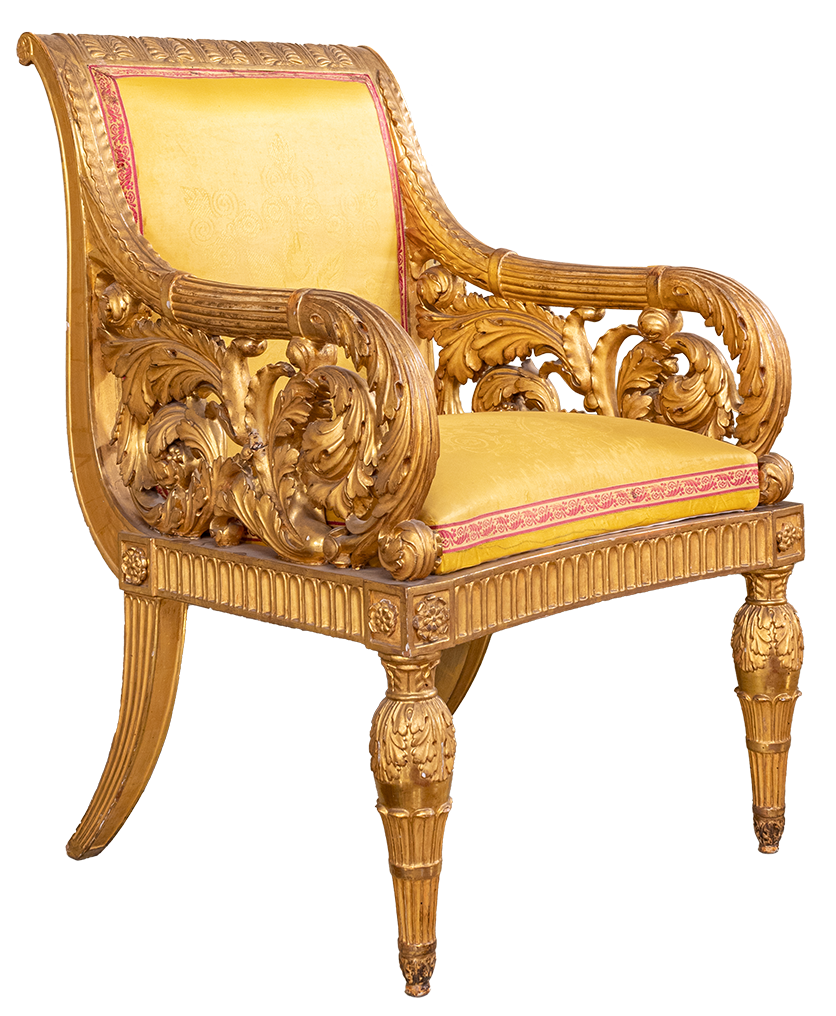
The armchair belongs to a salon conceived for the Hercules Room at the Pitti Palace and composed of seven more identical pieces and a sofa. The wooden structure was built by the cabinetmaker Giuseppe Colzi, and then carved by Paolo Sani by no later than August 1828, when all the pieces were delivered to the gilder Antonio Corazzi and then to the upholsterer Giuseppe Boninsegni.

Giuseppe Colzi, Paolo Sani (active between the late 18th and the first half of the 19th centuries)

Armchair
1833
Carved and gilt wood, upholstered seat and back lined with green damask silk fabric
Inv. Mobili Palazzo Pitti 1911, n. 12249
foto
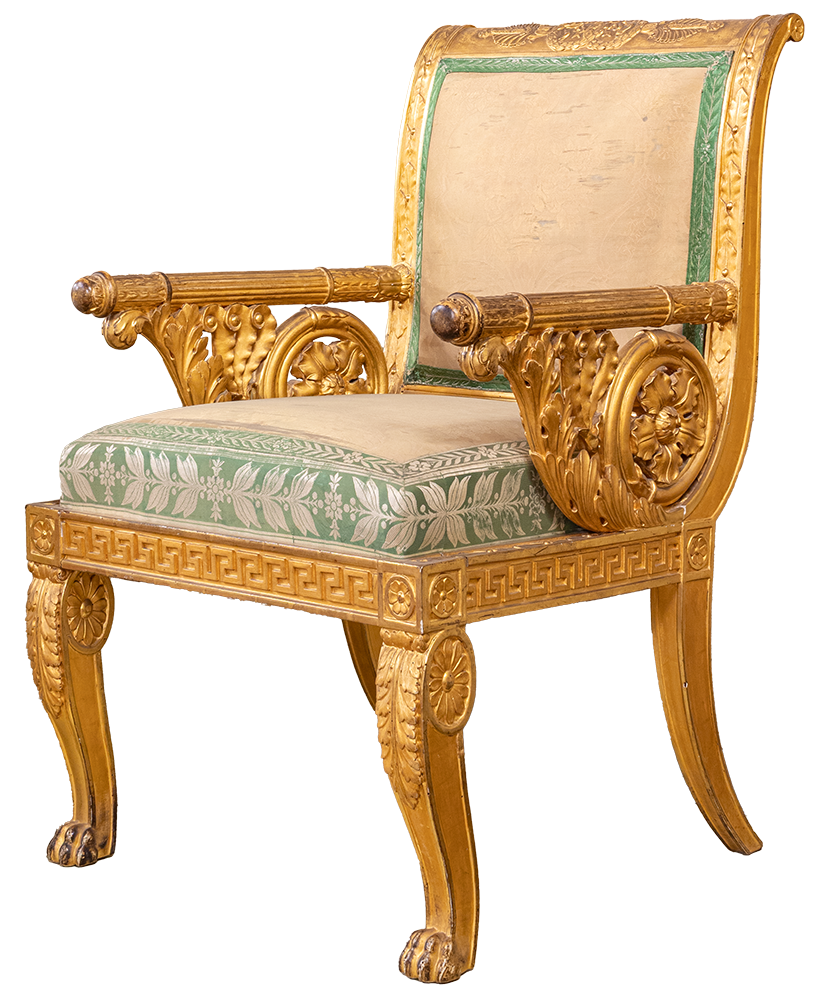
Along with 13 identical pieces and a sofa, the armchair was made in 1833 by the stipettaio (cabinetmaker) Giuseppe Colzi, along with the carver Paolo Sani, for the Grand Duchess Maria Antonia’s new salon known as the Hall of Parrots. The shape of the armrests was patterned in part after a model done by Colzi himself in 1828, and in part after a drawing by the architect Giovanni Poggi.

Giuseppe Colzi, Paolo Sani (active between the late 18th and the first half of the 19th centuries)

Model of an armchair
1828
Carved and gilt wood, upholstered cushion and back lined with velvet fabric
Inv. MPP 1911, n. 22845
foto
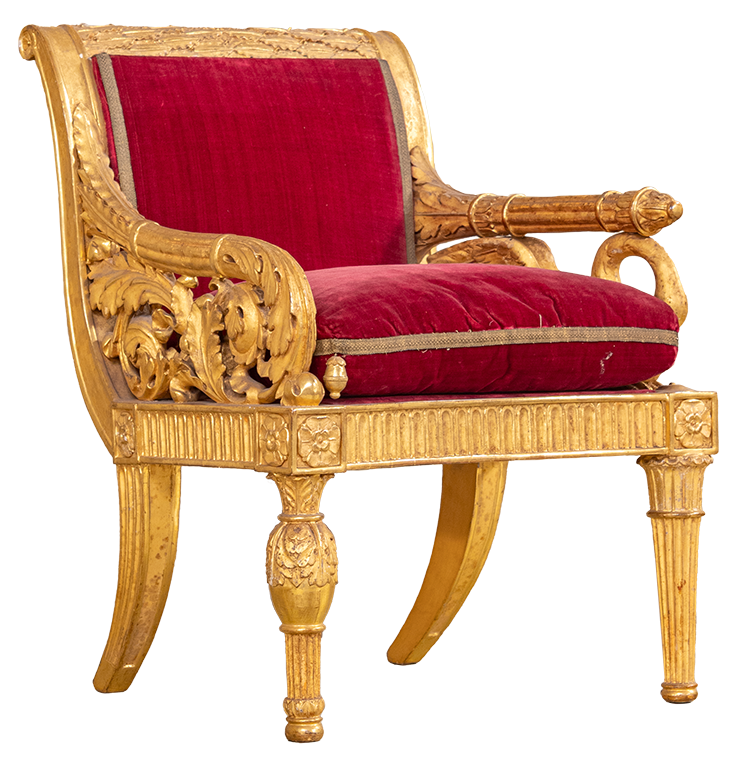
In 1828, Grand Duke Leopold II decided to provide chairs for the new Hercules Room. After some proposals were discarded, a model was chosen that presented two variations for supports for the armrests. The piece shown here, built by Colzi and carved by Sani, brought about the shape of the armchairs that furnish the Queen’s Salon and, in part, the pieces in the Hall of Parrots.

Lucchese production

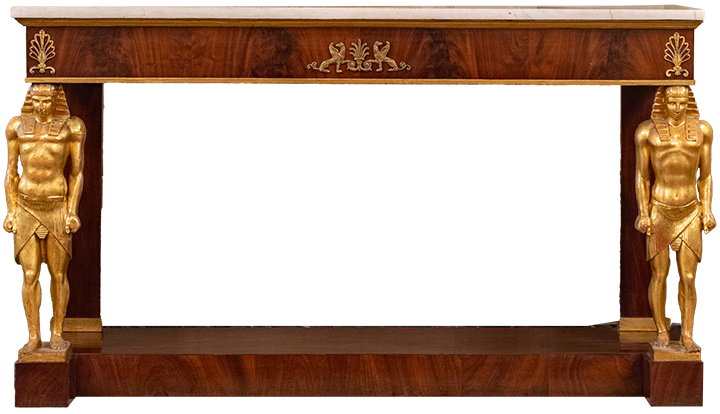
Pair of consoles
1820 circa
Veneered mahogany, partially carved and gilded, applications of gilt bronze, white marble top
Inv. Mobili Palazzo Pitti 1911, nn. 11882-33
foto
The pair of consoles appears inspired by previous models made in Rome. The taste for environments decorated with Egyptian adornments and views in fact originated from the etchings in the collection Delle diverse maniere d’adornare i cammini published by Giovanni Battista Piranesi in 1769, and from the later Egyptian Room at Villa Borghese, done in 1782.

Federico Lancetti (Bastia Umbra 1814 - Perugia 1899)

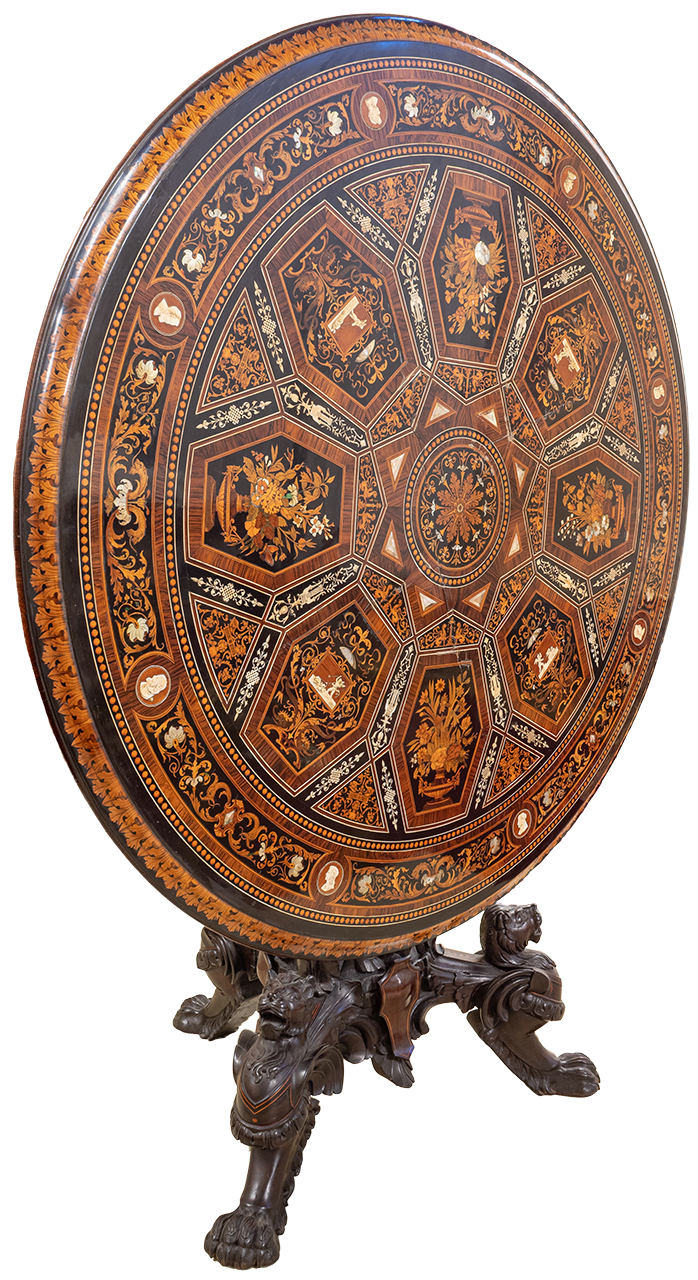
Table
1660
Carved and inlaid wood
Inv. Mobili Palazzo Pitti 1911, n. 14142
foto
Bearing the artist’s signature and the date 1860, the table was done by Federico Lancetti, a cabinetmaker from Perugia, for Esposizione Nazionale di Firenze in 1861, where the piece garnered enough success to be purchased by Victor Emmanuel II, who placed it in the Pitti Palace. In stylistic terms, the intarsia that adorns the top is inspired by the late-Renaissance taste then very much in vogue.

French manufacture

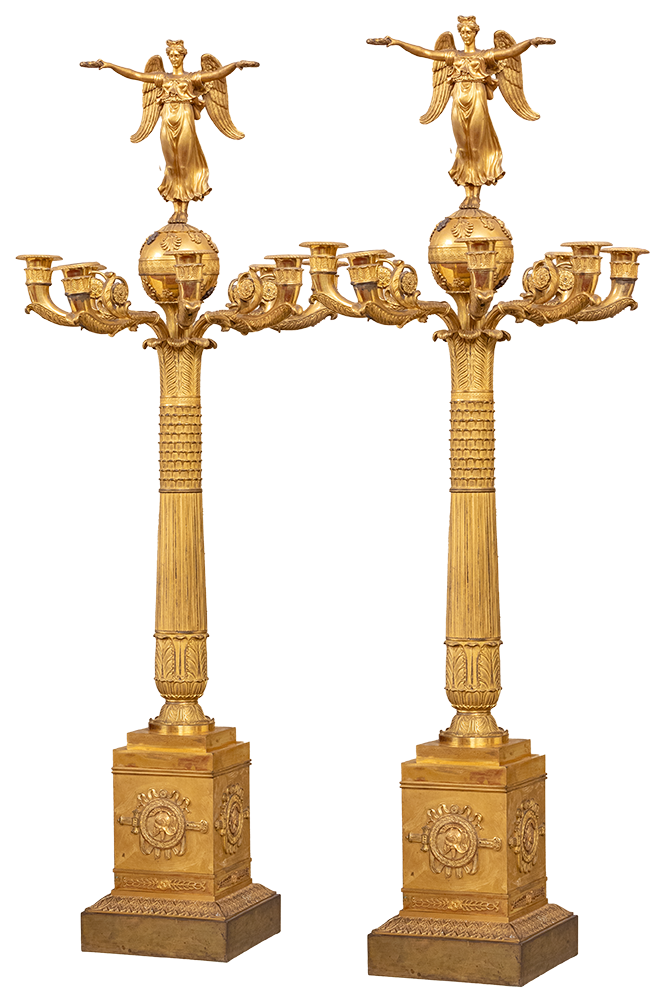
Two pairs of candelabras
1829 c.
Gilt and chiselled bronze
Inv. Mobili Palazzo Pitti 1911, n.11874 - 11877
foto

Giuseppe Cantieri (active 1838 – 1862)

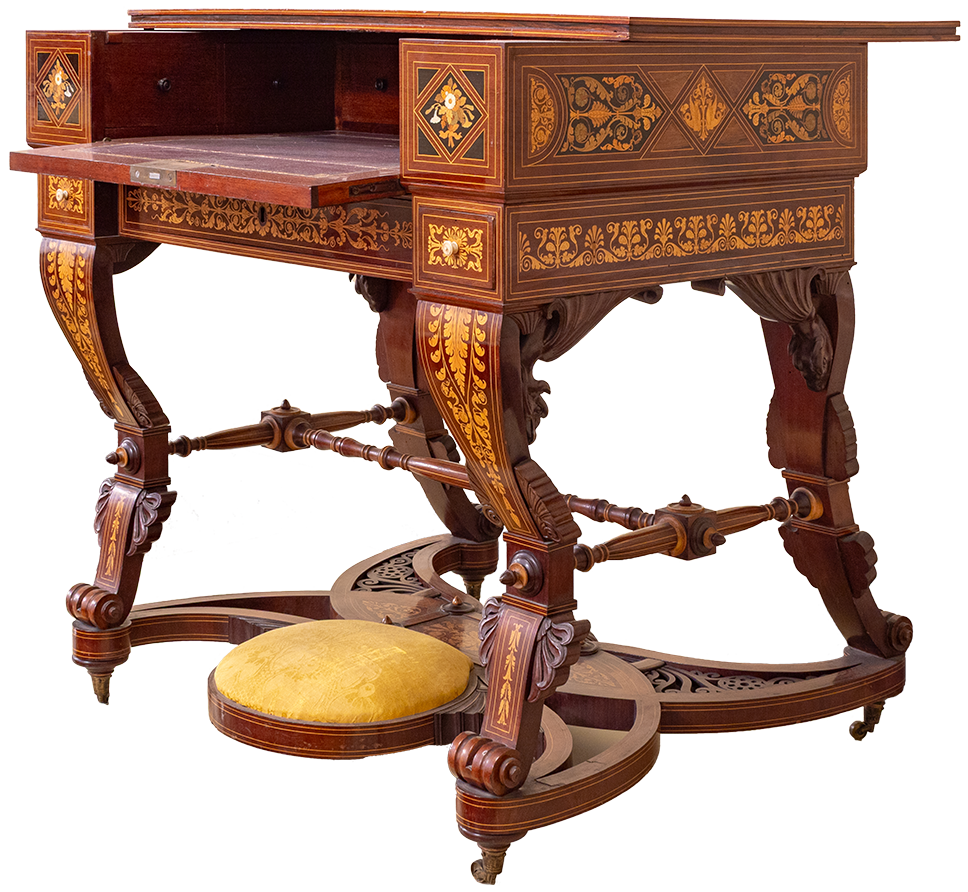
Desk
1841
Carved wood, veneered with mahogany and inlaid with ebony, holly, mother-of-pearl, and ivory
Inv. Mobili Palazzo Pitti 1911, n. 12416
foto
Signed and dated “1841. Giuseppe Cantieri di Lucca,” the piece stands out for its elegant form and rich, inlaid decoration, with ancient-style adornments alternating with naturalistic elements. The medallion at the centre of the desktop, depicting a young woman, two winged putti and a dove, suggests that it was to be used by a woman, as also indicated by its contained size.

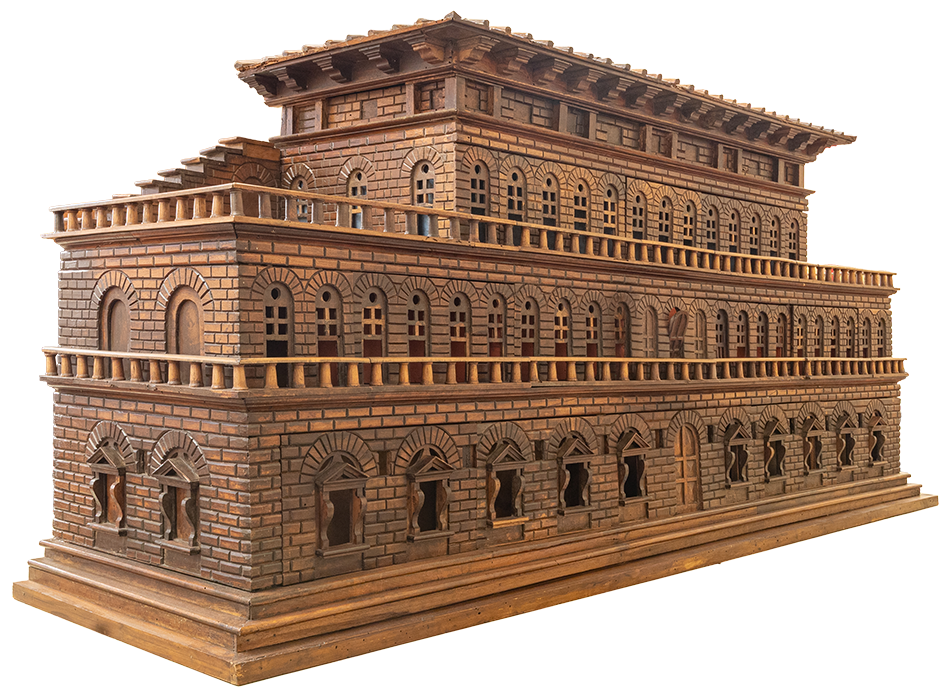
Cabinet in the shape of the Pitti Palace

Piece in natural walnut with lathed and carved decorative elements; internal parts in poplar
foto